
 gontael
If you’re looking for a used Chevy LS1 engine for sale, the safest way to choose one is to match the engine to your exact vehicle or swap application before comparing prices. Verify the donor vehicle, engine identification, mileage, configuration, included components, condition, and warranty or return terms. A 5.7L V8 may look similar to another LS1, but differences in electronics, accessories, oil-pan configuration, wiring, and supporting components can affect installation.
For a direct replacement, the goal is usually to find an engine that closely matches the original factory application. For a project or engine swap, compatibility becomes a broader question involving mounts, transmission, fuel delivery, cooling, wiring, and engine management.
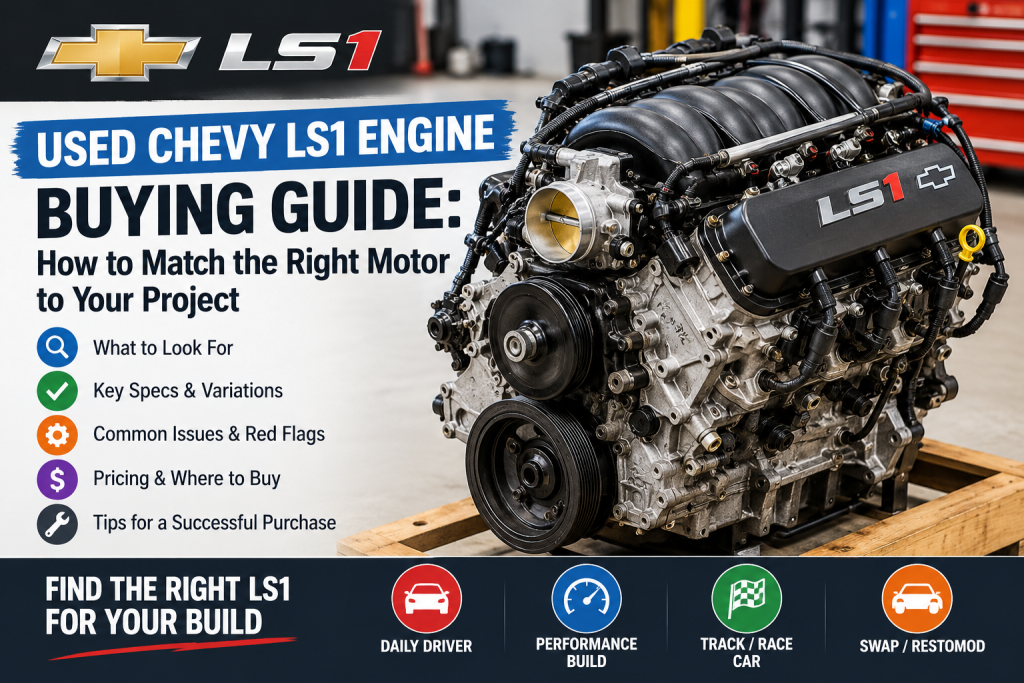
This guide explains what to check before purchasing a used LS1 so you can compare listings with fewer surprises.
Why the LS1 Remains Popular With Chevy Buyers
The LS1 is a 5.7-liter V8 from GM’s Gen III small-block family. It appeared in performance-oriented Chevrolet and other GM applications and became widely known among replacement-engine buyers and enthusiasts.
One reason LS1 engines remain sought after is the availability of used assemblies from donor vehicles. However, the term LS1 engine does not automatically tell you everything you need to know about a particular listing.
A used engine may be sold as:
- A complete engine assembly
- A long block
- An engine block
- An engine with accessories
- An engine with intake and fuel-system components
- An engine-and-transmission combination
- A donor assembly intended for a swap
These configurations can have very different prices and installation requirements.
First Determine What You Actually Need
Before searching for a used Chevy LS1 engine, establish whether you need a direct replacement or an engine for a custom project.
Direct Replacement
A direct replacement generally requires the closest possible match to the original engine application.
Start with:
- Vehicle year
- Chevrolet model
- VIN
- Original engine
- Transmission
- Drive configuration
- Factory engine-management system
If the original engine is still available, photograph identifying numbers and compare the components before removing it.
Engine Swap
A swap requires a much broader compatibility check.
Depending on the vehicle, you may need to address:
- Engine mounts
- Oil pan and pickup
- Wiring harness
- ECU or PCM
- Throttle system
- Fuel system
- Cooling system
- Exhaust
- Accessory brackets
- Transmission compatibility
- Driveshaft configuration
This is why an engine that appears inexpensive can become considerably more expensive once installation components are added.
How to Confirm the Correct LS1
Use the VIN as Your Starting Point
The VIN can help establish the original vehicle configuration. Give the seller the complete VIN when requesting fitment information rather than relying only on a model name.
For example, saying you need an LS1 for a particular Chevrolet model may not provide enough information to determine whether a specific engine assembly is appropriate.
Identify the Donor Engine
Ask where the replacement engine came from.
Useful donor information includes:
| Information | Why It Matters |
| Donor vehicle | Establishes original application |
| Model year | Helps narrow configuration |
| Mileage | Provides useful history |
| Engine identification | Confirms what you’re buying |
| Transmission | Can help establish original configuration |
| Running status | Indicates whether the engine was operational when removed |
| Inspection information | Provides evidence of condition |
The more complete the donor information, the easier it is to compare one used engine with another.
What Does “Used LS1 Engine” Include?
One of the biggest sources of confusion is the word engine.
A listing may show a photograph of a relatively complete assembly even though some components are not included in the sale.
Before ordering, determine whether you’re receiving a complete engine or only the core assembly.
Common Components to Check
| Component | Buying Consideration |
| Long block | Main engine assembly |
| Intake manifold | May affect intake and throttle compatibility |
| Throttle body | Verify electronic or mechanical configuration |
| Fuel injectors | Check compatibility with your setup |
| Fuel rails | May or may not be included |
| Alternator | Accessory configuration can vary |
| Starter | Check transmission compatibility |
| Engine harness | May simplify certain installations |
| Sensors | Confirm compatibility before reusing |
| Oil pan | Important for vehicle clearance |
| Exhaust manifolds | May differ between applications |
| ECU/PCM | Often relevant to swap projects |
Never assume that everything visible in the photograph is part of the purchase.
Ask for an itemized list of included components.
How Important Is Mileage on a Used LS1?
Mileage matters, but it should be treated as one piece of the evaluation rather than the entire decision.
A lower-mileage donor engine may appear attractive, but buyers should also investigate how the engine was used and what information is available about its condition.
Look for details such as:
- Donor vehicle mileage
- Maintenance history, when available
- Whether the vehicle was running before removal
- Signs of external damage
- Oil leaks
- Coolant contamination
- Corrosion
- Storage conditions
- Previous modifications
- Testing or inspection results
A seller who can provide meaningful information about the donor engine gives you a stronger basis for comparison than a listing containing only a mileage figure.
Don’t Treat Mileage as a Guarantee
Mileage alone does not establish engine health.
An engine’s condition depends on its history, maintenance, operating environment, and how it was treated. Ask what testing or inspection was performed rather than assuming that a particular mileage automatically means a particular condition.
Used, Rebuilt, and Remanufactured LS1 Engines
Buyers often encounter several descriptions when searching for an LS1 replacement.
| Type | Basic Description |
| Used engine | Original engine removed from another vehicle |
| Rebuilt engine | Engine that has been disassembled and had selected components serviced or replaced |
| Remanufactured engine | Engine rebuilt according to a defined remanufacturing process |
| Long block | Major internal engine assembly without all external components |
| Bare block | Engine block without the complete internal/external assembly |
These terms describe different products and should not be treated as interchangeable.
If you specifically want a used engine, confirm that the listing is for a previously installed OEM engine rather than a rebuilt or remanufactured alternative.
Compare the Complete Cost, Not Just the Engine Price
When evaluating a used Chevy LS1 engine for sale, the advertised price is only one part of the budget.
Your total cost can include:
- Engine purchase price
- Shipping
- Installation labor
- Gaskets and seals
- Fluids and filters
- Spark plugs
- Hoses
- Sensors
- Wiring
- Mounting components
- Cooling-system repairs
- Exhaust modifications
- Additional accessories
For a direct replacement, these additional costs may be relatively straightforward.
For a swap, they can be much more significant.
A Simple Comparison Method
When comparing two engines, create a side-by-side list:
Engine A
- Price
- Mileage
- Donor application
- Included parts
- Inspection information
- Warranty
- Shipping
Engine B
- Price
- Mileage
- Donor application
- Included parts
- Inspection information
- Warranty
- Shipping
This makes it easier to identify the true difference between the listings.
Inspect the Cause of the Original Engine Failure
Replacing an engine without addressing the reason the original failed can create another problem.
For example, if the original engine failure was connected to overheating, inspect the cooling system before installing the replacement.
If the engine experienced lubrication problems, investigate the oil system and related components.
Before installation, consider inspecting:
- Radiator
- Cooling hoses
- Thermostat
- Water pump
- Oil system
- Fuel system
- Engine mounts
- Wiring
- Battery and charging system
- Transmission connections
The replacement engine is only one part of the repair.
What Should You Ask the Seller?
Before purchasing a used LS1, ask clear questions rather than relying on a generic description.
Essential Questions
- What vehicle did this engine come from?
- What was the donor vehicle’s mileage?
- Was the engine running before removal?
- What engine identification information is available?
- Is this a complete engine or long block?
- Which accessories are included?
- Has the engine been inspected or tested?
- Are the photographs of the actual engine?
- What warranty is provided?
- What are the return requirements?
A seller’s answers can help you determine whether a listing deserves closer consideration.
People Also Ask About Used Chevy LS1 Engines
1. What should I look for when buying a used LS1 engine?
Check the donor vehicle, mileage, engine identification, condition, included components, fitment, inspection information, warranty, and return terms.
2. Is every LS1 engine interchangeable?
No. Although LS1 engines share a basic engine family, supporting components and configurations can differ between applications.
3. How do I know if a used LS1 will fit my Chevy?
Provide the vehicle’s year, model, VIN, original engine information, and transmission details to the seller and confirm the replacement engine’s application.
4. Is a complete LS1 better than a long block?
That depends on your project. A complete engine may reduce the number of additional components you need, while a long block can work well when you already have compatible accessories.
5. Does LS1 mileage matter?
Yes, but mileage should be considered together with donor history, inspection results, maintenance information, and overall condition.
6. Can an LS1 be used in a custom engine swap?
Yes, but the required parts depend on the receiving vehicle. Engine mounts, oil-pan clearance, electronics, fuel delivery, cooling, exhaust, and transmission compatibility should all be considered.
7. What is the biggest mistake when buying a used LS1?
Buying based solely on price or displacement without verifying the exact application and included components can lead to compatibility problems.
FAQs: Used Chevy LS1 Engine for Sale
How much does a used Chevy LS1 engine cost?
There is no single price that applies to every used LS1. Cost varies according to donor vehicle, mileage, engine condition, completeness, included components, availability, and seller terms. Compare the complete package rather than focusing only on the advertised price.
Is a used LS1 a good replacement for a failed engine?
It can be, provided the replacement matches the vehicle’s requirements and its condition and history are adequately documented. Always diagnose the original failure before installing the replacement.
What mileage is acceptable for a used LS1?
There is no universal mileage cutoff. Consider mileage alongside maintenance history, donor use, testing information, visible condition, and available warranty coverage.
Can I buy an LS1 without the accessories?
Yes. Some listings are sold as long blocks or core assemblies without all external accessories. Confirm exactly what is included before purchasing.
Should I replace gaskets on a used LS1?
Accessible seals and gaskets should be inspected during installation. Whether they should be replaced depends on their condition, the engine’s history, and the amount of work being performed.
Do I need the original ECU with an LS1?
For a direct replacement, the existing vehicle electronics may be usable depending on the application. For a swap, ECU/PCM compatibility becomes a separate consideration. The correct solution depends on the vehicle and engine configuration.
What information should I provide when requesting an LS1 replacement?
Provide the VIN, vehicle year, model, transmission information, original engine details, and whether the engine is intended as a direct replacement or a swap.
Used LS1 Engine Buying Checklist
Before placing an order, confirm all of the following:
- VIN and vehicle application
- Original engine configuration
- Donor vehicle
- Donor mileage
- Engine identification
- Engine condition
- Testing or inspection information
- Complete list of included components
- Warranty terms
- Return policy
- Shipping requirements
- Installation requirements
If you’re performing a swap, add:
- Engine mounts
- Oil-pan clearance
- Wiring
- ECU/PCM
- Fuel system
- Cooling system
- Exhaust
- Transmission compatibility

 Ahmed
Ahmed